Tuesday, January 4, 2022

January-February 2022

Administrator’s Notes

Ralph Gibson, Museums Administrator 

I hope everyone had a great New Year’s Day. I know it’s a little depressing to still be in the grips of the Pandemic, but hopefully things will get better as the month of January progresses. 

For now, our museums are open, though still at reduced hours, and we are working to get our newest museum, the Fruitvale Schoolhouse Museum, open sometime in the spring. We have a full schedule of Spring Living History booked at the Bernhard Museum and are hopeful that all the schools can make the fieldtrip. 

Looking ahead, we will begin planning for Heritage Trail 2022, one that we hope will look much like Heritage Trail 2019. And that is the mantra that’s been in my head since New Year’s Day – Hope. 2022 is the year of Hope. We have a great new class of volunteers with well over 20 new faces that will be gracing our museums and facilities, and we have plans to transform exhibit spaces in the Golden Drift Museum and the Placer County Museum that were shelved when the pandemic began. 2022, the year of hope, seems like a good year to finally tackle these projects. Of course, 2022 was also the year the film Soylent Green was set, but I think if we can all avoid the green sludge, we should be OK. I hope everyone has a terrific 2022!


The Alice Cross Pullen Quilt

Kasia Woroniecka, Curator of Collections


This cotton quilt was made by Alice Cross Pullen in 1915 with the help of her sisters Nettie and Lillian Cross and her mother Sarah Jane Cross. The quilt was constructed at the home of Alice Cross Pullen and Samuel Pullen, now a historical landmark, at 729 Lincoln Way in Auburn. Alice's granddaughter Alice Ekberg Fox of Fair Oaks was 10 years old during the quilting and remembers threading the needles. She presented this quilt to Carol Hughes, the donor, who restored and bound it in 1997. She donated the quilt in 2020. It will be on display at the Bernhard Museum in January.
Pullen Home, Undated.


Reflections of Roseville’s Ice-House Footbridge

Christina Richter, Administrative Clerk, Archives & Collections


The ice-house footbridge was once a centerpiece of Roseville’s daily life, now it’s preserved for generations going forward. A city will often represent their past with plaques and photographs and hope to tell a story. But plaques and photos can never tell the story as well as the actual experience of a historic structure. 
 
Today there’s a strong sense of time when you walk across the bridge, now located in Roseville’s Royer Park and spanning Dry Creek. 
 
Originally built in 1925, the massive structure provided ice-house employees an easy and safe walk over dangerously busy railroad tracks. Climbing the stairs from lower Vernon at B Street, each day workers utilized the bridge to gain entrance to the railyards and their employer, the Pacific Fruit Express.

The iconic, 40-ton bridge was built at 180 feet long, 11 feet wide, and 23 feet high. This historic structure represents the success of the ice plant, the secure employment once available for railroad workers, and gives us insight into the earliest days of a robust local economy.

Looking back, Roseville incorporated as a city in 1909, the same year the artificial ice plant had its beginnings in the railyards. The ice plant was so successful, that after a $600,000 investment was made in 1924, Roseville was on its way to becoming the largest freight shipping terminal west of the Mississippi. 

By the end of April, 1929, the Southern Pacific railroad employed a total of 1,225 people - making it Roseville’s largest employer, and the Pacific Fruit Express had become the largest artificial ice making plant in the world!

At the site of the bridge the Roseville Historical Society historic marker #2 states:

“Across this footbridge situated high above Roseville’s Southern Pacific Railroad yards passed untold thousands of Pacific Fruit Express employees on their way to work at the world’s largest artificial ice plant. In disuse since 1974 when the giant plant was razed, this local landmark was moved in 1986 for use as a public footbridge across Dry Creek and as a memorial to those days when Roseville was the ice capital of the world.”
 
Symbolically it represents a bygone era, a sweetheart really, of Roseville’s history. The footbridge that once served as a secure passage from long ago, is now seen as an inspiring reminder of our incredible legacy for future generations. 
 
Pacific Fruit Express Ice Plant. Used via permission of the City of Roseville Public Library, Leonard "Duke" Davis Collection.

Pioneer Honey Bees

April McDonald-Loomis, President, Placer County Historical Society


Did you know that honey bees were unknown on the West Coast until 1853? Honey bees are not even native to the United States. But as early as 1622, the Virginia colony began importing honey bees from Europe. That species quickly spread all over the eastern part of the United States but geography, climate and disease kept the bees there for over 200 hundred years. 

In early 1853, an unknown beekeeper managed to get twelve bee colonies to Panama from New York, he sold them to botanist Christopher A. Shelton. Shelton, in turn, brought them by steamer to San Jose, then by mule to Potrero de Santa Clara where Shelton had settled. Only one hive survived this last journey. Unfortunately, Shelton died in the explosion of the Jenny Lind steamship just one month after his bees got to the Rancho. 

That one hive quickly multiplied and became three hives. They sold at auction for $110 each, about 22 times the price of a beehive on the East Coast. 

A little closer to home, in 1856 W. B. Hayford and G. D. Hayford of Colfax bought ten swarms of bees in Lewistown Falls, Maine. They paid $5.00 a swarm. They got them as far as Panama when they found themselves in the middle of the infamous Watermelon Riot of 1856. 

The riot began with the simple act of an American refusing to pay a watermelon vendor for a slice of the fruit. A myriad of cultural and economic problems compounded this unfortunate event and set off a riot. The native Panamanians armed themselves with machetes and stones and attacked the Americans. The Americans fought back with guns. 

Over the course of the melee, two hotels, one store and most of the small American businesses had been destroyed. The riot then moved on to the railroad station. The station was destroyed, tracks removed and the telegraph wires were cut. The Hayford’s bee swarms were in a railroad car that was destroyed. The riot ended with deaths on both sides and many wounded. By September, 160 American troops occupied the area to maintain the safely of Americans passing through.

The Hayfords managed to keep the honey they had to feed the bee colonies and brought that back to Marysville where they sold it “very readily at five dollars a pound.” Later that same year, W. B. Hayford returned to Maine and bought five more swarms of bees and again brought them through Panama, this time with no trouble. He returned to Colfax and subdivided the swarms. He then sold at least one swarm to John and Harriet Crandall for $175 a swarm. The Crandalls were among the first agriculturists in Auburn. They had a large parcel of land with extensive gardens right on High Street. They had planted peach and apple trees in 1853 and by 1880 had 17 acres between present day High Street and Pine Street, facing today’s State Theater. No doubt the honey bees contributed to the success of the Crandall’s farm. They had five acres in apples trees, three acres in cherries and plums, two acres of grapes, as well as a large alfalfa field.

John Riggs Crandall

There are native bees in California, but they are solitary and do not make honey. They are, however, good pollinators, perhaps better than the domesticated honey bees for tomatoes, peaches, huckleberries and manzanita.


For sources that informed this story, see Pacific Rural Press 2 Nov, 1889 for the Hayfords account of bringing bees to Colfax. For general information on honey bees, see Cnps.org/flora, arboretum.ucdavis.edu, planetbee.org, atlasobscura.com/place/first-honey-bees. For the Watermelon Riot see Wikipedia for a general overview and the Encyclopedia of La6n American History p. 424-425 and the Hispanic American Historical Review Feb. 1, 1990 p. 85-108. For the Crandalls see Thompson and West p. 370 and Auburn Dry Diggings and Water by John Knox. 

Thanks to John Knox for once again finding and sharing this great little piece of our history! 

News from the Placer County Historical Society

April McDonald-Loomis, President, Placer County Historical Society

Happy 2022!  It doesn’t seem like that long ago that that turning 2000 was a big deal! Let’s hope this coming year will see the end of the Covid pandemic, I think we are all worn out from dealing with it. The Society doesn’t have much on the calendar for the coming year but at least we are back to our regular dinner meetings!  We are always looking for good speakers on local history so please let us know if you have anyone in mind or have a subject you are interested in hearing about. The schedule for 2022 dinner meetings:

February 3
April 7 
June 2
October 6
December 1

Hal Hall, April McDonald-Loomis, John Knox, and Mike Lynch present the 2021 Placer County History Award to Carol Cramer at the Bernhard Museum on December 10, 2021. 

We recently participated in a very joyful event. We unveiled two new plaques for the Bernhard Museum, a National Register plaque and a short history of the site plaque. The event also featured the first Posthumous History Award that was presented to Wendell Robie’s great grandson, Wendell Arnold in Wendell Robie’s name. Carol Cramer received the much deserved annual History Award for her work as a docent, a docent trainer, walking tour guide, living history founder, and that’s  just a few of her accomplishments and contributions to local history.  There was a great turn out by her fellow docents to honor her. Both awardees have contributed so much to the preservation and continuing legacy of the Bernhard Museum. It is always amazing to me how sometimes it only takes one person to have a lasting impact on preserving our history. We owe both Carol and Wendell a great deal of gratitude.
 
April McDonald-Loomis
President
Placer County Historical Society


Placer County Historical Organizations Calendar 

Please confirm all meeting times and locations which each organization.

Foresthill Divide Historical Society Meeting: Monday, January 17th at 6:00pm

Golden Drift Historical Society Meeting: Monday, February 7th at 7:00pm

Historical Advisory Board Meeting: Wednesday, February 16th at 5:30pm

Loomis Basin Historical Society Meeting: Wednesday, January 19th at 6:00pm; Wednesday, February 16th at 6:00pm

Placer County Historical Society Meeting: Thursday, January 6th at 2:00pm, Dinner Meeting: February 3rd at 6:00pm

Placer Sierra Railroad Heritage Society: Tuesday, January 25th at 7:00pm; Tuesday, February 22nd at 7:00pm

Placer Genealogical Society Meeting:  Thursday, January 27th at 7:00pm; Thursday, February 24th at 7:00pm

Rocklin Historical Society Meeting: Monday, January 10th at 6:00pm; Monday, February 14th at 6:00pm

Roseville Historical Society Meeting: Tuesday, January 11th at 4:00pm; Tuesday, February 8th at 4:00pm


Placer County Historical Organizations


Colfax Area Historical Society 
Dirk Gifford, (530) 346-8599 
colfaxhistory.org

Donner Summit Historical Society
Bill Oudegeest
(209) 606-6859
donnersummithistoricalsociety.org

Foresthill Divide Historical Society
Troy Simester
(530) 367-3535
foresthillhistory.org

Fruitvale School Hall Community Association
Mark Fowler

Gold Country Medical History Museum 
Lynn Carpenter
(530) 885-1252

Golden Drift Historical Society 
Sarah Fugate
(530) 389-2121

Historical Advisory Board
Glenn Vineyard
(916) 747-1961

Joss House Museum and Chinese History Center
Larry Finney
(530) 305-9380 

Lincoln Area Archives Museum
Elizabeth Jansen
(916) 645-3800
laamca.org

Lincoln Highway Association
Trey Pitsenberger
vice.president@lincolnhighwayassoc.org
https://www.lincolnhighwayassoc.org/ca/

Loomis Basin Historical Society
Karen Clifford
(916) 663-3871
ppgn.com/loomishistorical.html

Maidu Museum & Historic Site
Kaitlin Kincade
(916) 774-5934
roseville.ca.us/indianmuseum

Native Sons of the Golden West Parlor #59
Dave Allen
(530) 878-2878
dsallen59@sbcglobal.net

Newcastle Portuguese Hall Association
Mario Farinha
(530) 269-2412

North Lake Tahoe Historical Society
Phil Sexton
(530) 583-1762
northtahoemuseums.org

Old Town Auburn Preservation Society
Lynn Carpenter
(530) 885-1252 

Placer County Genealogical Society
Toni Rosasco
(530) 888-8036
pcgs.pcgenes.com

Placer County Historical Society
April McDonald-Loomis 
(530) 823-2128
placercountyhistoricalsociety.org

Placer County Museums Docent Guild
Craig Norris 

Placer Sierra Railroad Heritage Society
Chuck Spinks
chuck.spinks@outlook.com

Rocklin Historical Society
rocklinhistorical@gmail.com 
rocklinhistory.org

Roseville Historical Society
Denise Fiddyment
(916) 773-3003

S.N.O.W. Sports Museum 
Jill Short Milne, (415) 254-5686
thesnowmuseum.org

Saturday, October 30, 2021

November-December 2021

Ralph Gibson

Museums Administrator

The Old Auburn Cemetery Tour was a much-welcomed event as some of our programs and activities are finally coming back after a year of shutdowns due to COVID. There were 460 visitors to the Cemetery Tour who were eager to get out of the house and do something fun and interesting. It was, by far, the most people we’ve ever had for the Cemetery Tour. The Ghost Tours, too, are underway and the tickets sold out in just minutes. But this is the Holiday edition of the Placer, so I need to pivot to Christmas Trees and twinkling lights.

We are preparing for S’mores & Stories at the Bernhard Museum on Friday, December 10th from 5:00 to 8:00 pm. We’ll have the museum open for night tours; a campfire where we’ll roast marshmallows, make s’mores and tell stories; and serve hot cocoa. But before that program begins, there is going to be a very special ceremony commemorating the 50th Anniversary of the effort to save the Bernhard House by the Placer County Historical Museum Foundation (now the Placer County Historical Foundation) and the Placer County Historical Society. Two plaques will be unveiled. One will be an interpretive plaque that tells the story of the house & restoration and the other will recognize the Bernhard House for being on the National Register of Historic Places. The ceremony will kick off at 4:30 pm.

As always, the Museum spaces on the first floor of the Historic Courthouse will be open from 5:00 pm to 8:00 pm for Old Town’s Classic Christmas event on December 11th and 18th. Kids can decorate an ornament and we’ll provide free hot apple cider and cookies! We hope to see you at the Bernhard on the 10th at 4:30 and at the Courthouse for Old Town’s Classic Christmas!

Kelsey Monahan

Curator of Archives


In 1945 a group of astronomy enthusiasts founded the Sacramento Valley Astronomical Society (SVAS). The Society grew quickly and by 1948 they had 80 active members and 400 associate members. The Society was made up of men and women of all different ages and professions, all with a passion for star gazing. In addition to holding regular meetings, the group held lectures, viewing events, and telescope maker forums.


Sacramento Valley Astronomical Society, c. 1964. Courtesy of Walter Heiges.

In the early 1960s the Sacramento Valley Astronomical Society decided to build an observatory near Colfax, on the property of Bill Fisher, an SVAS member. Society members worked on almost every aspect of the project: designing the telescope, buildings its machinery, and even cutting and grinding the glass for the telescope’s mirror. When completed in 1969, the observatory was dedicated to Carl E. Wells, a charter member of the SVAS and recipient of the G. Bruce Blair gold medal for service to amateur astronomy.

Sacramento Valley Astronomical Society, c. 1964. Courtesy of Walter Heiges.

The Carl E. Wells Observatory was in use until about the 1980s, when the Henry Grieb Observatory was built in Blue Canyon. The Sacramento Valley Astronomical Society still uses the Blue Canyon observatory to this day to fulfill its mission to foster interest in astronomy, to encourage and assist members in the study of astronomy and in the making and use of astronomical instruments.

Katy Bartosh

Curator of Education

The SNOW Sports Museum is slated to open in Placer County’s Olympic Valley in 2025-2026. I was excited to learn about this new project that will encompass the history and spirit of our region’s winter sports. Jill Short Milne, the museum’s Executive Director, was able to share a bit about the new museum:

The SNOW Sports Museum will showcase the 1960 Winter Olympics and 200 years of Sierra Nevada Ski History, plus a Western Ski Hall of Fame to honor California and Nevada athletes and entrepreneurs from over 32 ski resorts. Located at the entrance to Olympic Valley, the proposed state-of-the-art, 20,000 sq. ft. environmentally sustainable building will also be a center for arts and culture, providing the community and visitors with the technology and space necessary for lectures, films, classes, and special events. The reception area will include a North Lake Tahoe Visitor’s Center, a cafĂ©, and a museum store. Outside, the original Tower of Nations will be part of a landscaped “Olympic Park”.

Milne shared the museum’s 2021-2022 Vision Report, which was enlightening. Their vision is to “establish a place where the evolution of winter sports in the Sierra Nevada and the Olympic Winter Games 1960 can be researched, studied, and displayed in an environmentally harmonious building.” Curious about the name? “A new name, Sierra Nevada Olympic and Winter Sports Museum, better represents the geographic region and core values of the museum. The catchy acronym will resonate with all generations: The S.N.O.W. Sports Museum.”

This will be a welcome addition to the plethora of museums and historical organizations in Placer County.


Artist rendering of the S.N.O.W. Sports Museum 

John Knox & April McDonald-Loomis

The Placer county bumper crop that you never heard of - Soap Root 


If you have read much Gold Rush history or Native American history you might have come across the mention of soap root. The Native Americans used it for washing clothes, shampoo, bathing, food, fishing, as an antiseptic and many other ways. The 49er’s used it also, a practice they learned from the Native Americans or from the local Spanish. Below is Henry B. Livingston’s recollection of his 49er days from the San Francisco Call in 8 Dec. 1895.

Less known is that by 1867, Placer County was producing vast amounts of soap root, the fiber was used for stuffing mattresses, cushions, sofas, chairs and the like. It replaced horse hair. It was still used for soap and toothpaste but also for one very unusual use – a cure for baldness.

On June 8, 1867, the Sacramento Bee reported that there was a factory in Dutch Flat on the Little Bear River. It employed twenty-two men. The factory was 70’ x 30’ and the owners had plans to enlarge it to twice that size. The raw material grew in abundance all over Placer County. The harvesting was mostly done by Chinese workers. The roots were dug out of the ground and bound in bundles of about one hundred pounds each and brought on poles to the factory. It was not easy work, soap root is notoriously hard to dig out of the ground.
 
Local men involved in the soap root industry included Allen Towle of the Towle Brothers Lumber Company, Nathan W. Blanchard a very successful lumberman from Dutch Flat and James L. Gould who supervised hydraulic mining efforts near Gold Run and Dutch Flat. For an idea of the volume of product, the San Francisco Examiner reported on June 15, 1872, that there were 250 tons of soap root baled and stored in Colfax awaiting the decision in a pending law suit. The value of the 250 tons was $8,621. 19. Hittlel’s Commerce & Industries of the Pacific Coast of North America in 1882, noted that 700 tons were exported to Europe in 1876. The article stated that the best soap root was grown “near the snow belt of the Sierra, and on the shaded side of the mountains.” The soap root plant can still be found in our area growing wild. The Effie Yeaw Nature Center in Carmichael has some growing along their trails and it can be seen from spring to autumn. The root goes dormant in the winter.

Other uses of soap root:

The glue made from soap root was used to waterproof baskets, to attach feathers to arrows and to hold together brushes, that were also made of soap root.
For fishing, the pulverized bulbs were thrown into slow moving streams or damned waterways to temporarily stun fish so they could be gathered. This is now illegal.
 The juice was used for tattoo ink.
Medicinal uses included laxatives, as an antiseptic, a diuretic or a pain relieving rub.
The sap was used for tanning hides.
The root was slow cooked overnight for food. An interesting note, although soap root is found below 5,000 feet, when the Donner Party was camped high in the Sierra that fateful winter, an Indian man passed by carrying a heavy pack of roots and gave stranded people some of his cargo, it was soap root. One of the survivors, Patrick Breen, wrote in his diary that the roots tasted like a sweet potato.


News from the Placer County Historical Society

April McDonald-Loomis

Greetings from the Placer County Historical Society

I missed the last Society Dinner in October but hear it was quite a success. Anne Holmes gave a great presentation on Dutch Flat. This was our first dinner meeting since the restrictions on gatherings due to Covid restrictions. We certainly hope all will be back on schedule from now on. Our next dinner meeting is scheduled for December 2nd at the Veteran’s Hall. It is our annual raffle, so if you have anything to donate it would be very appreciated if you could bring it along! We will also hold our long delayed election of Board Officers.

I also missed the annual Cemetery Tour that the Museums and the Docent Guild sponsored. It too was a great success. Our own membership chair, Carol Cramer, is the mastermind behind this terrific event. I understand the attendance was over 400 people!
 
Carol Cramer, photo by John Knox

Speaking of Carol Cramer, she is also the recipient of the 2021 History Award. This is a great honor and one richly deserved. Carol has been involved in so many of the museum’s programs and is a terrific Walking Tour guide, we are delighted she has been recognized for her many contributions to local history. On December 10th she will be awarded the honor at the 50th Anniversary Celebration of the restoration of the Bernhard Museum. That will take place at 4:30 right before the S’mores and Stories program at the Bernhard Museum. At that event there will be two new books available, one on the Bernhard restoration project and the other on the Bernhard family. We will also be unveiling the two new plaques we helped to fund, one designating the house as being listed on the National Register of Historic Places and another that commemorates the restoration project.

Those of you who have an interest in the appearance of the Placer High Campus should take a moment to look at the current renderings of the building that is now going up. Then take a look at the non-structural changes being proposed by a local citizens committee led by a highly respected, local architectural firm (pro-bono). Those minor changes would bring the building more in conformance with the historic nature of most of the rest of the buildings on campus. At this point the school board seems reluctant to even consider these small changes. A letter to the school board and/or a letter to the Auburn Journal might help. Maintaining this beautiful campus and holding on to its historic roots is a cause worth taking up!

50th Anniversary of the Effort to Save the Bernhard House

Donna Howell


On December 10th at 4:30 there will be a program commemorating this important anniversary and the unveiling of two plaques. In December of 1971, articles of Incorporation were filed to create the Placer County Historical Museum Foundation with the purpose of preserving the Bernhard House and turning it into a museum. With help from the Placer County Historical Society and Community leaders, over $300,000 was raised, including over $100,000 from the sale of pickets which were engraved with the donor’s name. The restoration was completed in 1982 and the museum opened to the public on July 2, 1982. The original board for the Placer County Historical Museum foundation were: Wendell Robie, President; Dan Higgins, 1st Vice President; Lauren McCann, 2nd Vice President; Berenice Pate, Secretary; and Harry Rosenburg, Treasurer. The current board, now under the name Placer County Historical Foundation, are: Hal Hall, President; Donna Howell, 1st Vice President, Karri Samson, 2nd Vice President; Mike Lynch, Secretary; and Al Stohl, Treasurer.

Placer County Historical Organizations Calendar

Please confirm all meeting times and locations which each organization

Foresthill Divide Historical Society Meeting: Monday, November 15th at 6:00pm

Golden Drift Historical Society Meeting: Monday, November 1st at 7:00pm

Historical Advisory Board Meeting: Wednesday, December 15th at 5:30pm

Loomis Basin Historical Society Meeting: Wednesday, November 17th at 6:00pm; Wednesday, December 15th at 6:00pm

Placer County Historical Society Meeting: Thursday, November 4th at 2:00pm, Dinner Meeting: December 2nd at 6:00pm

Placer Sierra Railroad Heritage Society: Tuesday, November 23rd at 7:00pm

Rocklin Historical Society Meeting: Monday, November 8th at 6:00pm; Monday, December 13th at 6:00pm

Roseville Historical Society Meeting: Tuesday, November 9th at 4:00pm; Tuesday, December 14th at 4:00pm

Placer County Historical Organizations


Colfax Area Historical Society 
Dirk Gifford, (530) 346-8599 
colfaxhistory.org

Donner Summit Historical Society
Bill Oudegeest
(209) 606-6859
donnersummithistoricalsociety.org

Foresthill Divide Historical Society
Troy Simester
(530) 367-3535
foresthillhistory.org

Fruitvale School Hall Community Association
Mark Fowler

Gold Country Medical History Museum 
Lynn Carpenter
(530) 885-1252

Golden Drift Historical Society 
Sarah Fugate
(530) 389-2121

Historical Advisory Board
Glenn Vineyard
(916) 747-1961

Joss House Museum and Chinese History Center
Larry Finney
(530) 305-9380 

Lincoln Area Archives Museum
Elizabeth Jansen
(916) 645-3800
laamca.org

Lincoln Highway Association
Trey Pitsenberger
vice.president@lincolnhighwayassoc.org
https://www.lincolnhighwayassoc.org/ca/

Loomis Basin Historical Society
Karen Clifford
(916) 663-3871
ppgn.com/loomishistorical.html

Maidu Museum & Historic Site
Kaitlin Kincade
(916) 774-5934
roseville.ca.us/indianmuseum

Native Sons of the Golden West Parlor #59
Dave Allen
(530) 878-2878
dsallen59@sbcglobal.net

Newcastle Portuguese Hall Association
Mario Farinha
(530) 269-2412

North Lake Tahoe Historical Society
Phil Sexton
(530) 583-1762
northtahoemuseums.org

Old Town Auburn Preservation Society
Lynn Carpenter
(530) 885-1252 

Placer County Genealogical Society
Toni Rosasco
(530) 888-8036
pcgs.pcgenes.com

Placer County Historical Society
April McDonald-Loomis 
(530) 823-2128
placercountyhistoricalsociety.org

Placer County Museums Docent Guild
Craig Norris 

Placer Sierra Railroad Heritage Society
Chuck Spinks
chuck.spinks@outlook.com

Rocklin Historical Society
rocklinhistorical@gmail.com 
rocklinhistory.org

Roseville Historical Society
Denise Fiddyment
(916) 773-3003

S.N.O.W. Sports Museum 
Jill Short Milne, (415) 254-5686
thesnowmuseum.org


Friday, August 27, 2021

September - October 2021


Ralph Gibson

Museums Administrator

Fall is my favorite time of year. I love it when the leaves turn, the pumpkins ripen, and the warm days are tempered by a cooler wind. Okay, okay, and Halloween – you all know it’s my favorite holiday. I’ve been wearing Halloween shirts since June this year. Last year we didn’t get much of a fall because of the pandemic. There was no Cemetery Tour, no Ghost Tours and I didn’t decorate the outside of my house like I usually do. This fall, though, looks to be a little different. The Cemetery Tour is planned for October 3rd from 1:30 to 4:00 pm at the Old Auburn Cemetery. We’ll have actors portraying significant people from our history near their plots with plenty of “Ghost Hosts” in the cemetery to help guide you. As always, the Cemetery Tour is free! The Old Auburn Ghost Tours are slated to happen October 23rd, October 30th, and November 6th at 6:00 pm. Tickets go on sale soon.

We will also decorate the Treasury of the Placer County Museum for Halloween and once again will have a creepy challenge for visitors. This year, we’ll have Creepy Dolls on display and all you need to do to win some candy is tell the docent how many creepy dolls you found. If you found them all, you get some Halloween candy.

Of course, all of this is heavily dependent upon how we navigate the new variants of COVID-19. We all sincerely hope that as more people are vaccinated and mitigation tools likes masks and distancing are adhered to, that the virus will finally wain and life will return to normal by early 2022.

All of us at the Placer County Museums wish you and yours a very safe, healthy and Happy Halloween!

Kelsey Monahan

Curator of Archives


At the Archive and Research Center we recently received a donation of scanned images of a photograph album kept by Maud Remler, c. 1913. Maud was the daughter of Leonard Remler, who was a pioneer resident of Foresthill, opening his store there in 1864.

In addition to some great photographs of the Remler family and their Foresthill home, there are several pages of photo strips and small stamp-sized photos glued in.

Page from the Maud Remler album, c. 1913
 
At first glance my assumption was that the strips of photos were photobooth images, due to their small size and format. However, upon further research, I found that the first automatic photobooth was not invented until 1925, after the c. 1913 date of the album.

Sacramento Star, March 19, 1910

It turns out these types of photographs are often called “ping pong photos,” and were invented in the 1890s. The term ping pong comes from the rapid movement the camera would make to capture multiple poses. This style of photography became popular because it was affordable, and often available in penny arcades and photo studios.

 
Mabel Lardner from Maud Remler album, c. 1913

The accessibility of ping pong photos and other advancements in camera technology made getting a photograph taken more casual than it had previously been. It was around this time that smiling in photographs became more commonplace, and many of the photo strips in this album contain both serious portrait poses and candid smiling snapshots.

 from Maud Remler album, c. 1913

It is not hard to see why these types of photos were so popular, and why the later invention of the photobooth was such a success. There is something about seeing multiple snapshots of the same person that almost seems to bring them to life.

Christina Richter

Administrative Clerk, Archives & Collections


A part of Golden Gate Bridge history resides in Roseville, but few people could you tell you where it’s located. Hidden in plain sight, the telltale orange beams are part of the beautiful Miners Ravine Trail opened by the City of Roseville in 1992.

Prior to 1992 the Miners Ravine Parkway was inaccessible, as there was no way to cross the creek. The trail was originally built in 1988 as an access road to a sewer line but was otherwise unused. That all changed when developer Nick Alexander came upon a creative solution to help open the trail to the public.

Through his network he was notified of the availability of retired I-beams from the Golden Gate Bridge that could be purchased at a relatively inexpensive cost. The beams were acquired and work crews began to create the concrete abutments for six bridges to cross Miners Ravine Creek along a two-mile pathway.

The Press Tribune, June 29, 1992

At 51-feet long and 25-tons each, three Golden Gate 1940s-era steel I-beams were cut in half and anchored onto the concrete abutments. According to a June 26, 1992 Press Tribune article (above), “the sections were so heavy they burned out a crane that removed them from the trucks delivering them from the Bay Area…” Once successfully moved, the I-beams were cut in half, then each was placed in the pre-engineered area for the six bridges.
 
The Press Tribune, January 3, 1997
One of the benefits of these heavy bridges is that they will withstand a 100-year flood, and that fact was proven in 1997 when Roseville experienced one of its worst floods in a century. The bridges performed beautifully and proved to be a solid addition to the trail.
 
Portion of the Miners Ravine Trail with bridge

This portion of the Miners Ravine Trail can be accessed from the back of the United Artist Movie Theater parking lot off Eureka Blvd., and from the trail parking lot off Orvietto Drive.

Katy Bartosh

Curator of Education


Rules for Teachers. One, you will not marry during the term of your contract. Two, you are not to keep company with men. And thus starts the list of twelve rules for teachers in 1915, attributed (on this particular poster) to the Carnegie Museum. In the same style is a 1848 “Punishments” poster that lists twenty-four offenses and the accompanying number of lashes that students would receive for breaking them

I found these two lists in the cabinet at our new Fruitvale School Museum. They seemed to be an excellent addition to the new living history and exhibit content I’m creating. It’s not hard to imagine an old rural schoolteacher in Placer County following these rules. “You may not loiter downtown in ice cream stores.” They’re amusing, and believable, in that “oh, those silly old-time sensibilities!” way.

However, a quick Google search to find more information led to more questions than answers. The “1915 Rules for Teachers” appear verbatim on material from The Little Red School House in Humboldt, “One-room Schools of Knox County,” the University of Hawai’i, and the Portage County Historical Society – to name just a few. And, to further complicate matters, each of these websites quote a different source. Are they from Placer County? Maybe Cabell County West Virginia? Or the Pennington Institute for Young Ladies? Are they even real?

A 2013 article from Open Culture explored this conundrum. According to the author, these rules are generally attributed to Sacramento, but their exact source is still unknown. But I think a quote from the New Hampshire Historical Society captures the bigger issue at hand. “The sources for these ‘rules’ are unknown; thus we cannot attest to their authenticity – only to their verisimilitude and charming quaintness.”

How many times have I had a local insist that there are definitely tunnels under [insert historic Auburn building or site here]. Our past is full of facts and figures, but urban legends and embellished histories abound. It’s easy to imagine a secret tunnel running under the courthouse. Not only could you quickly rationalize why such a tunnel might exist, but it also makes a great story. But is there actually a prohibition era tunnel from the Historic Courthouse to the White House? No.

Rules for teachers; these could be completely accurate (and I’m determined to track down their origin), but it’s not their veracity that’s spread them far and wide. We tend to like the past to be charming; interesting, but in a harmless, anecdotal way.

These rules serve as an interesting reminder of how we study the past, versus create The Past. I’ll keep you all posted.

Getting Back to the Bernhard Museum

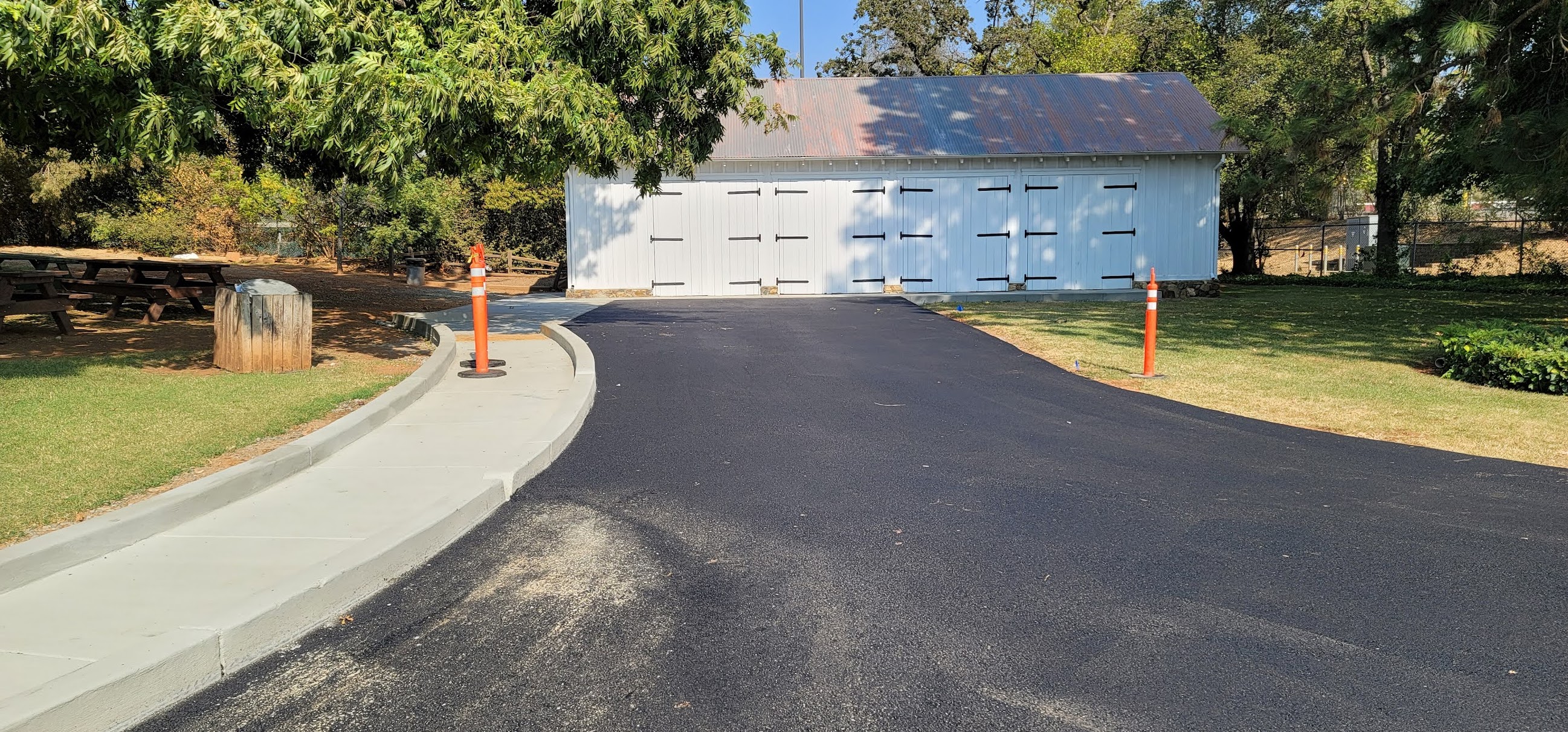
The Bernhard Museum has been closed since March 2020. We’re looking forward to welcoming visitors, and students, back to the property in mid-September. The Museum now has a beautiful asphalt driveway and parking lot. Throughout August, contractors were busily grading, framing, pouring, and paving. There is also a new cement sidewalk that winds around the lot, up to the porch, and over to the carriage barn.

This paving project will make the museum more easily accessible for all visitors, and hopefully help cut down on dirt and dust within the museum.


April McDonald-Loomis

President, Placer County Historical Society


As most of you know, we had to cancel our much anticipated August Dinner Meeting due to the fire in Colfax. The county planned on using the Veteran’s Hall and requested that we cancel our meeting. As it turned out they didn’t have to use the facility after all. We will tentatively plan for the October 7th Dinner Meeting and will let you know via email and newspaper press releases. Everything just seems so unsettled right now.

Some good news, our plaques are up on Firehouse # 1 thanks to Matt at the City’s Public Works Department. The plans for the Bernhard Anniversary celebration are moving forward. That will be on December 10th in conjunction with the Museums Christmas event at the Bernhard. The book on the Bernhards by John Knox and Carol Cramer will be available at that time. This is a terrific book that includes primary source examples along with the narrative, it has only had limited publication up to now. The Society and the Placer County Historical Museum Foundation are funding a large run. So this is a great opportunity to add to your local history book collection. It will be available through our website soon.

The History Award Committee has received several really formidable candidates for the yearly award. That award will be handed out at our December Dinner Meeting. Hopefully we will be back to our regular schedule by then!

your summer if going well despite the smoke and the fires. Hopefully we will all get together again in October!yle="text-align: center;">
Calendar of Events 
Please confirm all meeting times and locations which each organization

Foresthill Divide Historical Society Meeting: Monday, September 21st at 6:00pm

Golden Drift Historical Society Meeting: Monday, October 4th at 7:00pm

Historical Advisory Board Meeting: Wednesday, October 20th at 5:30pm

Loomis Basin Historical Society Meeting: Wednesday, September 15th at 6:00pm; Wednesday, October 20th at 6:00pm

Placer County Historical Society Meeting: Thursday, September 2nd at 2:00pm, Dinner Meeting: October 7th, 6:00pm

Placer Sierra Railroad Heritage Society: Thursday, September 23rd at 7:00pm; Thursday, October 28th at 7:00pm

Placer Genealogical Society Meeting: Thursday, September 23rd at 7:00pm; Thursday, October 28th at 7:00pm

Rocklin Historical Society Meeting: Monday, September 13th at 6:00pm; Monday, October 11th at 6:00pm

Roseville Historical Society Meeting: Tuesday, September 14th at 4:00pm; Tuesday, October 12th at 4:00pm

Historical Organizations 


Colfax Area Historical Society 
Jay MacIntyre, President
(530) 346-8599 
colfaxhistory.org

Donner Summit Historical Society
Bill Oudegeest
(209) 606-6859
donnersummithistoricalsociety.org

Foresthill Divide Historical Society
Troy Simester
(530) 367-3535
foresthillhistory.org

Fruitvale School Hall Community Association
Mark Fowler

Gold Country Medical History Museum 
Lynn Carpenter
(530) 885-1252

Golden Drift Historical Society 
Sarah Fugate
(530) 389-2121

Historical Advisory Board
Glenn Vineyard
(916) 747-1961

Joss House Museum and Chinese History Center
Larry Finney
(530) 305-9380 

Lincoln Area Archives Museum
Elizabeth Jansen
(916) 645-3800
laamca.org

Lincoln Highway Association
Trey Pitsenberger
https://www.lincolnhighwayassoc.org/ca/

Loomis Basin Historical Society
Karen Clifford
(916) 663-3871
ppgn.com/loomishistorical.html

Maidu Museum & Historic Site
Kaitlin Kincade
(916) 774-5934
roseville.ca.us/indianmuseum

The Museum of Sierra Ski History and 1960 Winter Olympics
David C. Antonucci 
(775) 722-3502
Sierraskimuseum.com

Native Sons of the Golden West Parlor #59
Dave Allen
(530) 878-2878
dsallen59@sbcglobal.net

Newcastle Portuguese Hall Association
Mario Farinha
(530) 269-2412

North Lake Tahoe Historical Society
Phil Sexton
(530) 583-1762
northtahoemuseums.org

Old Town Auburn Preservation Society
Lynn Carpenter
(530) 885-1252 

Placer County Genealogical Society
Toni Rosasco
(530) 888-8036
pcgenes.com

Placer County Historical Society
April McDonald-Loomis 
(530) 823-2128
placercountyhistoricalsociety.org

Placer County Museums Docent Guild
Fran Hanson
(530) 878-6990 

Placer Sierra Railroad Heritage Society
Chuck Spinks
chuck.spinks@outlook.com

Rocklin Historical Society
Hank Lohse 
(916) 624-3464
rocklinhistory.org

Roseville Fire Museum
Jim Giblin
(916) 538-1809
rosevillefiremuseum@gmail.org

Roseville Historical Society
Denise Fiddyment
(916) 773-3003


Wednesday, June 30, 2021

July - August 2021

Ralph Gibson

Museums Administrator


We all have family stories.

The lore of our roots is as fascinating, hilarious, and tragic as any great novel. I link it to fiction because if you listened to your grandpa tell you the story of his parents or grandparents, you can usually tell when a story is being embellished – sometimes a little, sometimes a lot. But beyond embellishment, family stories are from someone’s perspective of an event and it may be remarkably different from the perspective of someone else who experienced the exact same event. Memory, too, plays a key role. Case in point is my family tragedy.

The variations of the story I was told, depending on who was telling the story, was that we lost 8-11 family members when a drunk truck driver going the wrong way on a Texas or Arizona highway hit them head-on. There is some truth there, but I was able to decipher what that truth was by accident. While researching something else, I found several articles about the accident, but none mentioned the other driver being drunk. He was driving a pickup truck over 70 mph with his wife and two dogs as passengers. He mistook a “Reduce Speed” sign as a veer left sign and he went left, directly into the path of a station wagon carrying nine of my family members, including my great grandparents. Neither driver touched the brakes. The only survivor was one of the pickup truck driver’s dogs. I think the drunk driver aspect of the story was an emotional reaction to the overwhelming tragedy. It can’t just be a simple mistake, it must have been something darker, more menacing to take out five adults and four young children. There are a lot of complex things that happen in our brains when we forge a memory and even more happens to that memory overtime. But that doesn’t mean these mistakes of memory aren’t important. They are, it’s what makes us human. This is why we view oral histories with our eyes wide open. We know memory is fallible and we know this is just from one person’s perspective. But that perspective, however flawed, is still important.

Redlands Daily Facts, July 1, 1961

As I write this, it is exactly sixty years to the date from the accident that took nine members of my family in Jean, Nevada - June 30, 1961. The facts I got from newspaper articles and death records. But the deep feelings I have about this tragedy, I learned from my family.

Kelsey Monahan

Curator of Archives

Some of my favorite projects to research in the last 15 months have been the self-guided walking tours for Auburn, Dutch Flat, and Foresthill. Through our deed records, photograph collection, and other archival records, I got to dig deeper into each building and how it fit into the town’s history. Frequently, I discovered items in our collection that while fascinating to me, never found their way into the tours themselves.

In my most recent project for Foresthill, every time I embarked on researching a new building, one oral history interview continued to pop up: Norman McLeod’s interview of Matthew B. Langstaff in 1986. Thanks to the work of Darryl Elliott to digitize the oral history tapes, I was able to hear Langstaff’s stories in his own voice.

His interview gave me insight into many buildings in Foresthill that ended up in the self-guided tour— he attended school in the schoolhouse that eventually became the Foresthill Public Utility District building, he owned the old Rea and McAninch Stagecoach Barn, and he later owned the old Garrison store next to the Odd Fellows building.

The interview has so many great stories that it seems impossible to choose just one. Some of my favorite parts of his interview had to do with his experiences of running the mail between Colfax and the Foresthill Divide: “You’ve seen the old rural boxes where the box would be hanging out and the mailbag. They’d hang it on a post then, you never even slow down. When you’re good at it, you just reach out and whip that sack off there and set it on the seat and you’d have a strap that you’d strap it as you go along. Sometimes you’d bring a big lizard in with it. The first earwigs I ever saw came into the cab and I had to stop and climb out of there. I had a lizard and a bunch of earwigs.”

Matthew B. Langstaff at 10 months old, 1916. PCM Collection.

The progress Darryl has made digitizing the oral history tapes has made me so excited to see what other voices of Placer County we will get to hear. If you’d like to hear the Matthew B. Langstaff oral history recording, or get a copy of the transcript, please email me at kmonahan@placer.ca.gov. Be on the lookout for the Foresthill Self-Guided Tour on our blog!

Christina Richter

Administrative Clerk, Archives & Collections


From 1905 to 1941, Auburn’s women’s jail consisted of a small cubbyhole underneath the Historic Courthouse steps. Today, the cell is part of the Placer County Museum and is curated to represent the space’s original purpose.

The space is small, only large enough for two cots, a washbasin, and open toilet. With no windows, the only light comes through a heavy iron screen over the door, making the air stale and still. A 1937 article in The Placer Herald decried these conditions. The women’s jail was called a menace to health, with bad plumbing and a distressing odor. The report was disputed by Sheriff Elmer Gum, but it was widely acknowledged that the conditions at the jail were poor.

A jail register from 1895 to 1923 provides details on the women who were incarcerated in Auburn. Crimes included consorting with a Chinaman, abusing a horse, child desertion, and writing fraudulent checks. In 1905 Mamie Gardener and Rose Sherwood were arrested for attempting to rob a Chinese man of $15.00. Mamie was sentenced and became the first woman housed in the women’s jail cell. These early records provide insight into Placer County’s social environment. Offenses included “disturbing the peace” with ten charges, “vagrancy” with seventeen charges, and an incredible thirty-six women being charged with “insanity”. Being “insane” accounted for a little over 30% of the known crimes that put women in jail at that time.

One of the most infamous prisoners held in the women’s jail was Alma Bell, a young lady who shot and killed Joe Armes. Alma freely admitted to her crime, claiming that Joe had been her lover and had promised to marry her before “throwing her over.” Alma was reported as saying “I killed him because I believed I was right in doing so.”

At that time, a man could be found guilty of a “breach of promise.” For this reason, the public generally sided with Alma with reports of “He got what he deserved” and “Show by your verdict that the man who seduces a woman under promise of marriage must keep that promise under penalty of death.” Yet the prosecution found no credible evidence of the engagement.

At a time when Women’s Suffrage made regular headlines, Alma Bell was acquitted, “not guilty by reason of insanity.”

When you visit the women’s jail and peek into the cold, dark walls of the past, think of the women who were housed in that place. Especially remember that some of the crimes women were accused of, and acquitted of, were truly a reflection of the times.

Katy Bartosh

Curator of Education


On June 18th, 2019, Governor Gavin Newsom issued an apology on behalf of California to the Native American Peoples of the state for the “violence, discrimination and exploitation sanctioned by state government through its history.”

A meeting between tribal leaders from around the State with Governor Newsom in Sacramento, June 18, 2019. 
This two-page executive order recognized and apologized for the state sanctioned abuse and genocide of native peoples during the Gold Rush and beyond. Tribes were removed from their traditional lands, children were separated from their families, and Native Americans could be forced into servitude. Stated plainly by California’s first Governor Peter Burnett, “That a war of extermination will continue to be waged between the races until the Indian race becomes extinct must be expected.”

This executive order forms the background of our newest painting (on-loan) at the Placer County Museum. Commissioned last year by Placer County Superior Judge Garen Horst, the piece was created by Derek Smalling, a member of the Choctaw Nation of Oklahoma. His painting features Lady Justice in vivid color.

Lady Justice, commissioned by Judge Horst from artist Derek Smalling

As described by Smalling, “She adorns herself with a silver gorget of her rank and her shawl denotes the daytime sun and the nighttime moon of her vigilance. She staves off attack with the Inter-locking Arms Shield that represents to the Southeastern Tribal Nations the fundamental concept of Community. And, She wields a Pen Lance for that is how we must now affect change in both our Tribal Nations but in our broader community of the United States. She is an active agent of protection, securing her families, clans, Country, and Tribal Nations.”

Smalling’s Lady Justice was chosen to represent The Presidential Task Force on Missing and Murdered American Indians and Alaska Natives. This task force was created in 2019 to help identify the insufficiencies and jurisdictional issues between state, local, and Tribal law enforcement. Lady Justice is both a reminder and a call to action, for the murder and missing Indigenous women, girls, and two spirit people of this country.


Smalling with his original Lady Justice
Reflecting on justice, Judge Horst relates to trial jurors the symbolism of the three Lady Justice statues presiding over the three entrances to the Historic Courthouse in Auburn. They symbolize hallmarks of the American justice system, like equality under the law, due process, and accountability. To Judge Horst, this painting of Lady Justice, from a Native American point of view, provokes us to think about justice from another perspective, akin to the contemporary restorative and reparative justice movement.

“How extraordinary that in this empire, which is the United States of America, our histories are threading in a more honest and complete fashion never encountered in human history, and in so short amount of time.” D. Smalling

April McDonald-Loomis

President, Placer County Historical Society

Good news!!! The dinner meetings are back! We don’t usually meet in August but are making up for lost time! Mark your calendars for August 5, Thursday at 6:00 pm. The details will be announced later: menu, price, RSVP date. Watch your email or check our website. We will also hold our long over-due election of directors and officers. See the slate of candidates below. We will have a selection of our newest books available for purchase at the meeting, we can take cash or checks, no cards. The booklets are $5.00, the larger books are $21.00. We will not have change! The following titles will be available for purchase: Auburn Dry Diggins and water, Auburn Images, Auburn's Landmarks and Monuments, Infamous Crimes and Criminals, Notable and Interesting Women Vol. 1 & 2, Sam Hollady's 1849 Journey and the History of Placer Co. 1882 & 1924. 

We will go back to our regular schedule for the rest of the year, meeting in October and December. In December we will be presenting the winner of the Placer County History Award. The Board is contemplating moving the general meetings to noon instead of 6:00 pm for October and December with a luncheon not a dinner. If you have any opinion on this please contact me at April.pchs@gmail.com We would really like some feedback on this.

The corrected plaque for Firehouse No. # 1 arrived and was handed over to the City. Hopefully it will be up by the time this newsletter is out. Always nice to get our history right.

President – April McDonald-Loomis
1st Vice-President – Mike Holmes
Secretary – Karen Bleuel
Treasurer – Al Stoll
Director – Jean Allender- 2021
Director – Delana Ruud - 2021
Director – John Knox - 2021
Director – Ed Weiss - 2020
Director – Carmel-Barry Schweyer -2020
Director – Sherri Schackner – 2020

The Gold Country Medical History Museum 

The Gold Country Medical History Museum is in dire need of volunteer docents. They are looking for docents to work four hours a month on Saturdays, 11-3. No medical knowledge necessary! Just a willingness to learn and help visitors enjoy this unique and education museum. 

Contact Dr. Rod Moser at 530-906-9822


Calendar of Events 

Please confirm all meeting times and locations which each organization

Foresthill Divide Historical Society Meeting: Monday, July 19th at 6:00pm

Golden Drift Historical Society Meeting: Monday, August 2nd at 7:00pm

Historical Advisory Board Meeting: Wednesday, August 18th at 5:30pm

Historical Organizations Committee Meeting: Tuesday, August 10th at 10:00am

Loomis Basin Historical Society Meeting: Wednesday, July 21st at 6:00pm; Wednesday, August 18th at 6:00pm

Placer County Historical Society Meeting: Thursday, July 1st at 2:00pm, Dinner Meeting: August 5th, 6:00pm

Placer Genealogical Society Meeting: Thursday, July 22nd at 7:00pm; Thursday, August 26th at 7:00pm

Rocklin Historical Society Meeting: Monday, July 12th at 6:00pm; Monday, August 9th at 6:00pm

Roseville Historical Society Meeting: Tuesday, July 13th at 4:00pm; Tuesday, August 10th at 4:00pm

Historical Organizations

Colfax Area Historical Society 
Jay MacIntyre, President
(530) 346-8599 
colfaxhistory.org

Donner Summit Historical Society
Bill Oudegeest
(209) 606-6859
donnersummithistoricalsociety.org

Foresthill Divide Historical Society
Troy Simester
(530) 367-3535
foresthillhistory.org

Fruitvale School Hall Community Association
Mark Fowler

Gold Country Medical History Museum 
Lynn Carpenter
(530) 885-1252

Golden Drift Historical Society 
Sarah Fugate
(530) 389-2121

Historical Advisory Board
Glenn Vineyard
(916) 747-1961

Joss House Museum and Chinese History Center
Larry Finney
(530) 305-9380 

Lincoln Area Archives Museum
Elizabeth Jansen
(916) 645-3800
laamca.org

Lincoln Highway Association
Trey Pitsenberger
https://www.lincolnhighwayassoc.org/ca/

Loomis Basin Historical Society
Karen Clifford
(916) 663-3871
ppgn.com/loomishistorical.html

Maidu Museum & Historic Site
Kaitlin Kincade
(916) 774-5934
roseville.ca.us/indianmuseum

The Museum of Sierra Ski History and 1960 Winter Olympics
David C. Antonucci 
(775) 722-3502
Sierraskimuseum.com

Native Sons of the Golden West Parlor #59
Dave Allen
(530) 878-2878
dsallen59@sbcglobal.net

Newcastle Portuguese Hall Association
Mario Farinha
(530) 269-2412

North Lake Tahoe Historical Society
Phil Sexton
(530) 583-1762
northtahoemuseums.org

Old Town Auburn Preservation Society
Lynn Carpenter
(530) 885-1252 

Placer County Genealogical Society
Toni Rosasco
(530) 888-8036
pcgenes.com

Placer County Historical Society
April McDonald-Loomis 
(530) 823-2128
placercountyhistoricalsociety.org

Placer County Museums Docent Guild
Fran Hanson
(530) 878-6990 

Placer Sierra Railroad Heritage Society
Chuck Spinks
chuck.spinks@outlook.com

Rocklin Historical Society
Hank Lohse 
(916) 624-3464
rocklinhistory.org

Roseville Fire Museum
Jim Giblin
(916) 538-1809
rosevillefiremueum@gmail.org

Roseville Historical Society
Denise Fiddyment
(916) 773-3003